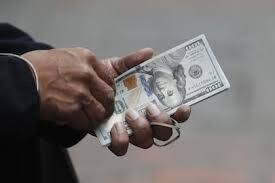
Since the relaxation of currency controls, dollar purchases in the official market exceeded USD 26.392 billion, with a net buyer balance of USD 22.714 billion, according to official data from the Central Bank of Argentina. This process intensified especially in the months leading up to the legislative elections, when political uncertainty acted as a catalyst for foreign currency demand.
On the external front, exports channeled through the foreign exchange market reached USD 6.118 billion, while imports totaled USD 5.692 billion. The Central Bank also highlighted that the stock of commercial debt linked to advances and export pre-financing decreased by approximately USD 1.500 billion in December, signaling a partial normalization in foreign trade financing. The services deficit was mainly associated with travel and card consumption abroad, with net outflows of USD 445 million.
However, interest in the dollar rebounded in December: nearly 1.5 million Argentines acquired USD 2.186 billion, reactivating demand at year-end. Overall, in December, the Non-Financial Private Sector recorded a net purchase of USD 978 million, driven primarily by individual demand for banknotes. The upward trend continued in the following months: USD 2.283 billion in May, USD 2.468 billion in June, and USD 3.473 billion in July, in a context of increasing exchange rate hedging by savers.
A temporary correction was recorded in August with purchases of USD 2.448 billion, but September became the peak of the period with USD 5.130 billion, coinciding with increased pre-election volatility. April marked the first full month without controls, with around one million individuals accessing the official market and buying USD 2.077 billion. Nevertheless, the monetary authority emphasized that about 70% of these expenses were paid directly with own dollars, mitigating the impact on the official exchange market.
The behavior observed since the lifting of the controls confirms that, even in a context of greater exchange flexibility, dollarization remains a structural feature of Argentine savings. It is sensitive to the political situation and macroeconomic expectations, with direct effects on external equilibrium and reserve dynamics. October, an election month, maintained a high demand level of USD 4.731 billion, confirming a historical pattern: dollarization as a refuge against political uncertainty. The shift came in November, when gross purchases fell to USD 1.597 billion, the lowest record since the lifting of controls, despite the participation of some 1.1 million buyers.